
Reactive vehicle maintenance is one of the fastest ways to drain a household budget or stall a growing business. Waiting until a dashboard warning light flashes or a mechanical component fails on the highway turns a routine, low-cost inspection into a multi-thousand-dollar emergency repair bill and lost productivity. Every vehicle on the road experiences predictable wear based on its weight, powertrain design, and daily duty cycle. A commuter sedan navigating stop-and-go city traffic faces entirely different mechanical stresses than a half-ton pickup hauling weekend trailers or a Class 8 semi-truck logging hundreds of highway miles every day. By understanding how wear patterns differ across vehicle classes, drivers and fleet managers can catch small issues early. This preventative care guide breaks down practical maintenance strategies across passenger cars, pickups, and commercial rigs so you can extend component lifespans, protect resale value, and keep every mile safe and predictable.
Universal Safety Systems for Every Vehicle Class
Rotate Tires and Calibrate Pressure Before Seasonal Temperature Shifts
Rubber compounds and internal air pressure react immediately to ambient weather changes, making tire upkeep critical whether you drive a compact hatchback or an eighteen-wheeler. For every 10-degree Fahrenheit drop in outside temperature, tire inflation decreases by roughly 1 PSI. Running underinflated tires increases sidewall flexing, generates excessive internal heat, and compromises wet-road traction. Checking cold tire pressure monthly with a calibrated digital gauge prevents premature shoulder wear and reduces the risk of sudden highway blowouts.
- Verify minimum tread depths: Replace passenger car tires at 4/32 of an inch for wet traction, light-truck tires at 6/32 of an inch before winter, and commercial steer tires at the 4/32-inch legal threshold.
- Follow proper rotation patterns: Rotate front-wheel-drive and all-wheel-drive tires every 5,000 to 7,500 miles to equalize tread wear across all four corners.
- Inspect sidewalls for dry rot: Look for fine cracking, bulges, or embedded road debris whenever you wash your vehicle.
Scheduling regular wheel balancing, alignment checks, and high-load inspections through a reliable local tire shop service ensures maximum mileage from every set of tires.
Seal Minor Rock Chips Immediately to Preserve Structural Cabin Integrity

A windshield does far more than block wind and road spray; it is an engineered structural component of your vehicle. On modern cars, pickups, and commercial cabs, laminated safety glass provides up to 30 percent of the cabin’s roof-crush resistance during a rollover accident and serves as a rigid backboard for passenger-side airbag deployment. When a piece of gravel strikes the glass, moisture and microscopic road grit immediately begin working into the fracture, weakening the bond between the glass layers and the inner polyvinyl butyral membrane.
- Avoid sudden thermal shock: Never blast maximum-heat defrosters onto an icy windshield or direct freezing air conditioning onto sun-baked glass if a chip is present, as rapid temperature swings cause cracks to spread instantly.
- Cover fresh damage right away: Place a piece of clear packing tape over a new rock chip to keep water and dirt out until a technician can inject resin.
- Account for camera calibration: Vehicles equipped with lane-departure warning or automatic emergency braking require precise sensor recalibration whenever a full glass replacement becomes necessary.
Contacting a qualified cracked windshield auto glass company while damage is still smaller than a quarter often saves hundreds of dollars in replacement costs.
Daily-Driver Passenger Car Maintenance Milestones
Flush Engine Oil, Coolant, and Transmission Fluids Based on Driving Conditions
Modern passenger vehicles feature sophisticated, tight-tolerance engines and multi-speed transmissions that rely on clean, shear-stable fluids to manage friction and heat. Many drivers follow maximum factory oil change intervals without realizing their daily commute falls under the manufacturer’s severe-service schedule. Frequent short trips under ten miles prevent engine oil from reaching full operating temperature, allowing fuel dilution and condensation to form sludge inside the crankcase. Over time, engine coolant also loses its corrosion inhibitors and turns acidic, eating away at aluminum radiator cores and water pump impellers from the inside out.
- Shorten severe-duty oil intervals: Change full-synthetic engine oil and filters every 5,000 miles if your routine involves heavy traffic, idling, or dusty roads.
- Test coolant freeze and pH levels: Flush the cooling system every 50,000 to 60,000 miles to prevent overheating and heater core blockages.
- Refresh automatic transmission fluid: Perform a pan drain-and-fill around 60,000 miles to protect delicate valve bodies and clutch packs from heat degradation.
Partnering with experienced auto mechanics who inspect fluid color and condition at every service visit helps prevent catastrophic powertrain failure.
Replace Worn Brake Pads and Rotors Before Metal-on-Metal Scoring Occurs
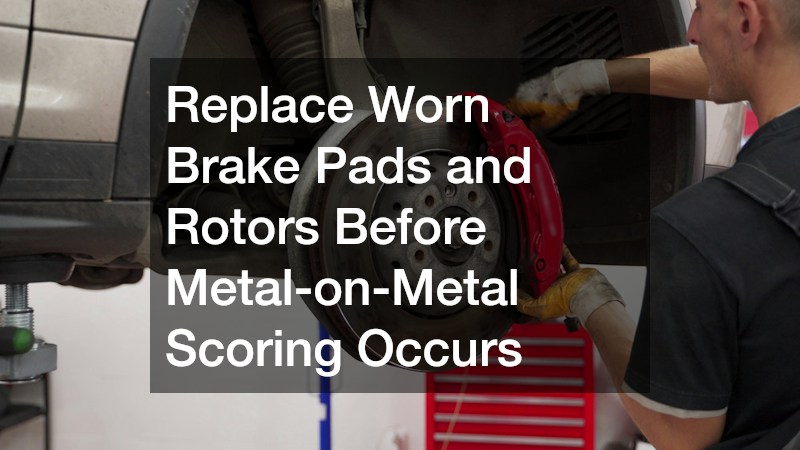
Your braking system converts kinetic energy into intense thermal energy every time you slow down, making friction components some of the hardest-working parts on a daily commuter car. Waiting until you hear harsh grinding noises means the friction material has completely worn away, allowing the steel backing plate to carve deep grooves into the brake rotor. Beyond pads and rotors, hydraulic brake fluid is hygroscopic, meaning it naturally absorbs atmospheric moisture through microscopic rubber hose pores over time. Contaminated fluid lowers the boiling point and accelerates internal rust inside expensive anti-lock braking modules.
- Measure pad thickness during rotations: Schedule pad replacement once friction material wears down to 3 millimeters, roughly the thickness of two stacked pennies.
- Watch for steering wheel vibration: Pulsation during moderate braking usually indicates uneven rotor thickness or lateral runout caused by excessive heat.
- Flush brake fluid every two to three years: Fresh DOT 3 or DOT 4 fluid preserves firm pedal feel and protects caliper pistons from seizing.
Bundling thorough brake inspections and hydraulic flushes into routine auto repair services keeps stopping distances short and prevents costly hardware replacements.
Diagnose Check Engine Codes and Battery Voltage Drops Ahead of Extreme Weather
Modern passenger cars depend on dozens of electronic sensors and onboard control modules to balance fuel economy, emissions, and drivability. When an amber Check Engine Light illuminates, ignoring it can turn a minor $40 sensor issue into a ruined catalytic converter. Simultaneously, modern infotainment screens, heated seats, and start-stop systems place heavy electrical loads on 12-volt batteries. Most automotive batteries lose significant cold-cranking capacity after three years of service, often failing without warning on the first freezing morning or scorching summer afternoon.
- Never ignore a flashing warning light: A blinking Check Engine Light signals an active engine misfire that dumps raw fuel into the exhaust system and requires immediate shutdown.
- Test resting battery voltage: A healthy, fully charged battery should read 12.6 volts with the engine off; readings below 12.2 volts indicate weak reserves.
- Clean corroded battery terminals: White or greenish buildup around cable clamps restricts current flow and strains the alternator during engine starts.
Having a trusted shop for local car repairs inspect diagnostic trouble codes and run computerized battery load tests keeps daily commutes free from roadside breakdowns.
Light-Duty Pickup and Work Truck Preservation
Inspect Leaf Springs, Shocks, and Ball Joints After Heavy Hauling
Pickups are engineered for versatility, yet frequently alternating between an empty bed and a heavy payload places immense stress on chassis geometry. Carrying construction materials, towing campers, or driving over washboard job-site roads accelerates wear on shock absorber valving, leaf spring eye bushings, and front-end ball joints. When shocks lose hydraulic damping control, the truck bounces excessively after hitting bumps, lengthening stopping distances and causing erratic handling during emergency lane changes.
- Check shock bodies for oil weeping: A light film of hydraulic fluid running down the outside of a shock absorber tube means the internal seal has failed.
- Listen for front-end clunks: Knocking sounds when turning at low speeds or hitting driveway aprons often point to worn lower ball joints or tie-rod ends.
- Inspect leaf spring packs and U-bolts: Look for cracked leaves, shifted center pins, or loose axle U-bolts after hauling near maximum payload capacity.
Maintaining or upgrading suspension for trucks ensures stable steering control, proper headlight aim, and safe braking performance under heavy loads.
Weatherproof Your Bed and Shield Cargo From Moisture and UV Damage

An uncovered pickup bed takes a constant beating from ultraviolet radiation, standing rainwater, road salt, and shifting cargo. Over time, water pools around wheel wells and tailgate seams, triggering hidden rust that compromises structural bed mounts. Leaving tools, camping gear, or supplies exposed to the elements also invites theft and moisture damage, while an open tailgate creates aerodynamic turbulence at highway speeds that lowers fuel efficiency on long trips.
- Clear factory bed drain holes: Regularly sweep leaves, dirt, and gravel out of the front corners of the truck bed so rainwater drains freely.
- Condition rubber weatherstripping: Wipe perimeter seals with a silicone-based protectant twice a year to prevent cracking and maintain a watertight fit.
- Apply protective bed coatings: Pair a textured spray-in liner with an overhead barrier to prevent bare metal scratches from escalating into deep corrosion.
Installing durable, properly fitted truck covers protects valuable cargo from harsh weather, improves highway aerodynamics, and preserves your pickup’s long-term resale value.
Service 4WD Transfer Cases, Differentials, and Trailer Wiring Harnesses Annually
Four-wheel-drive pickups and towing rigs rely on heavy-duty gearboxes and electrical connections that rarely get attention during basic oil changes. Front and rear differentials and the transfer case contain high-viscosity gear oil that shears down under high torque and towing heat. Additionally, backing a boat trailer down a launch ramp or crossing deep puddles can draw water past axle breather vents, turning gear oil into a milky emulsion that fails to lubricate ring-and-pinion gears.
- Exercise the 4WD system monthly: Engage four-wheel drive for a few miles on a straight, loose-gravel surface to keep shift forks and front axle seals lubricated.
- Change differential fluid every 30,000 to 50,000 miles: Frequent towing or off-road driving warrants shorter intervals to flush out microscopic metal wear particles.
- Protect trailer plugs with dielectric grease: Clean corrosion from 7-pin wiring connectors and apply dielectric grease to prevent trailer brake and lighting failures.
Working with a knowledgeable local truck repair facility ensures your four-wheel-drive actuators, axle seals, and auxiliary transmission coolers remain ready for demanding workloads.
Heavy-Duty Commercial and Semi-Truck Uptime Strategies

Maintain Diesel Particulate Filters, Fuel Injectors, and Turbochargers
Modern Class 7 and Class 8 commercial diesels operate at extreme cylinder pressures and fuel-rail tolerances where microscopic contaminants can cause severe mechanical damage. High-pressure common-rail fuel injectors atomize diesel at over 30,000 PSI, meaning even tiny amounts of water or debris can score injector tips. Meanwhile, emissions aftertreatment components like the Diesel Particulate Filter and Exhaust Gas Recirculation valve require proper exhaust temperatures to burn off accumulated soot without triggering engine derate modes that cripple highway speed.
- Drain fuel-water separators daily: Check sight bowls during pre-trip walk-arounds and purge accumulated water before it reaches the primary fuel pump.
- Minimize extended stationary idling: Excessive low-load idling clogs soot filters rapidly and promotes wet-stacking inside the exhaust manifold.
- Allow proper turbocharger cooldown: Idle the engine for two to three minutes after a heavy grade climb so exhaust gas temperatures drop below 350 degrees before shutoff.
Scheduling proactive aftertreatment cleanings, injector balance tests, and oil-sample analysis through specialized diesel truck repair services prevents costly roadside breakdowns and unplanned downtime.
Perform Pre-Trip Air Brake, Fifth-Wheel, and DOT Compliance Inspections
For commercial drivers and fleet operators, preventative care goes hand-in-hand with federal safety compliance and roadside inspection readiness. Heavy-duty air brake systems rely on compressed air lines, slack adjusters, and brake chambers that must function identically across both tractor and trailer axles. Moisture accumulation inside air tanks can freeze in winter or corrode internal relay valves, while worn fifth-wheel locking jaws create dangerous coupling play between the tractor and kingpin.
- Bleed air supply reservoirs daily: Pull manual drain valves at the end of every shift to expel moisture and compressor oil buildup from the air system.
- Verify brake chamber pushrod stroke: Measure pushrod travel regularly and inspect automatic slack adjusters to ensure brakes stay within legal adjustment limits.
- Grease the fifth-wheel plate and inspect jaws: Apply fresh heavy-duty grease to the skid plate and verify that locking jaws wrap completely around the trailer kingpin.
Establishing relationships with vetted local semi truck repair shops along your primary freight routes makes staying ahead of air-system maintenance and annual DOT inspections effortless.
Preventative vehicle care is never an unnecessary expense; it is a disciplined strategy that puts you in control of repair costs, safety, and vehicle longevity. Whether you are commuting in a compact sedan, hauling equipment in a four-wheel-drive pickup, or managing freight schedules with a commercial semi-truck, the underlying principle remains identical: small, scheduled interventions always cost less than catastrophic mechanical failures. Fluids degrade, rubber seals harden, brake linings wear thin, and heavy loads slowly stress suspension components regardless of how carefully you drive. By building consistent inspection habits around seasonal temperature shifts, mileage milestones, and pre-trip walk-arounds, you catch minor wear before it cascades into multi-component damage. Review your maintenance records today, inspect your tires, fluids, and safety systems, and book any overdue service appointments before your next daily commute, weekend haul, or cross-country run.